
All have sinned and in need of a Savior!

The Book of Romans presents salvation as the work of God through Jesus Christ, received by faith apart from human merit or works. Paul builds the message carefully from mankind’s guilt to God’s provision in Christ.
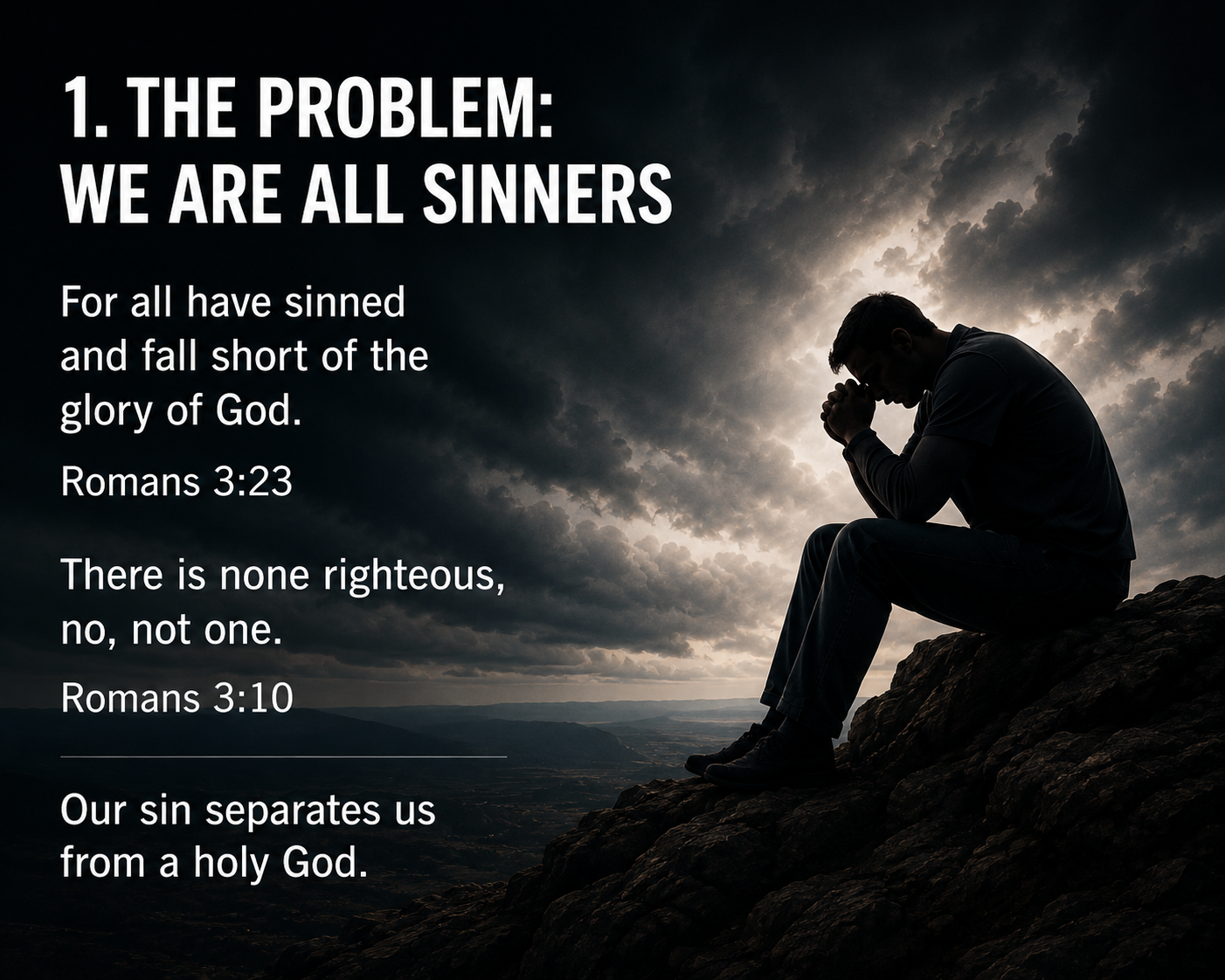
Romans begins by revealing the universal problem of sin. Paul declares that all humanity stands guilty before God. The Gentile world is without excuse because creation itself reveals God’s eternal power and divine nature, yet mankind suppresses the truth in unrighteousness (Romans 1:18–32). The Jewish world is also guilty because possessing the Law did not produce righteousness (Romans 2:1–29). Paul concludes:
“There is none righteous, no, not one” (Romans 3:10).
“For all have sinned and fall short of the glory of God” (Romans 3:23).
Because God is holy and just, sin brings condemnation and death:
“For the wages of sin is death” (Romans 6:23).
Paul then reveals God’s provision for salvation through Jesus Christ. God demonstrated His love by sending His Son to die for sinners:
“But God demonstrates His own love toward us, in that while we were still sinners, Christ died for us” (Romans 5:8).
Jesus Christ was delivered up for our offenses and raised again for our justification (Romans 4:25). Through His blood, God can remain just while justifying the sinner who believes in Jesus (Romans 3:24–26).
Paul emphasizes repeatedly that salvation is not earned by works, law-keeping, or human effort. It is received through faith:
“Therefore we conclude that a man is justified by faith apart from the deeds of the law” (Romans 3:28).
“To him who does not work but believes on Him who justifies the ungodly, his faith is accounted for righteousness” (Romans 4:5).
Abraham himself was justified by faith before the Law was given, making him the example of all who believe (Romans 4:1–25).
Paul explains that through faith in Christ the believer is justified, meaning declared righteous before God:
“Therefore, having been justified by faith, we have peace with God through our Lord Jesus Christ” (Romans 5:1).
Those who are united to Christ are no longer under condemnation:
“There is therefore now no condemnation to those who are in Christ Jesus” (Romans 8:1).
Salvation involves repentance and faith expressed openly in Christ. Paul writes:
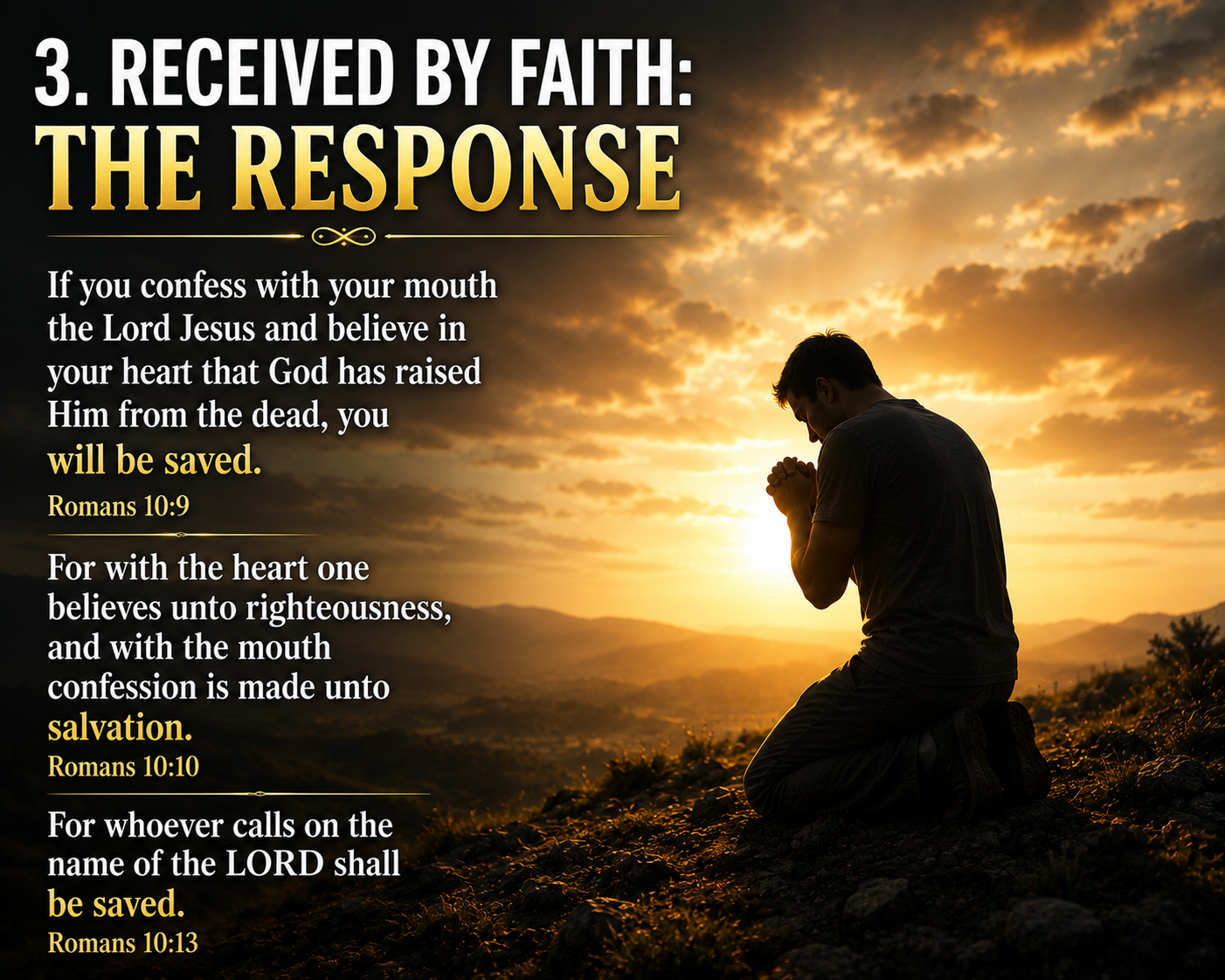
“If you confess with your mouth the Lord Jesus and believe in your heart that God has raised Him from the dead, you will be saved” (Romans 10:9).
“For with the heart one believes unto righteousness, and with the mouth confession is made unto salvation” (Romans 10:10).
Paul then gives the universal invitation:
“For whoever calls on the name of the LORD shall be saved” (Romans 10:13).
Romans presents salvation as entirely rooted in the grace of God. Man is sinful and unable to save himself. Christ died and rose again to provide righteousness for sinners. God justifies those who believe in Jesus Christ, not by works, but by faith. Those who trust in Christ are forgiven, reconciled to God, indwelt by the Spirit, adopted as children of God, and given the hope of eternal glory (Romans 5:1–11; Romans 8:14–39).